L’exploitation de l’énergie solaire à l’aide de panneaux solaires a permis de faire un grand pas en avant vers les solutions d’énergie renouvelable. Cependant, le risque de surchauffe est une préoccupation qui tend à inquiéter de nombreux utilisateurs potentiels et propriétaires de panneaux solaires. Cet article vise à faire la lumière sur ce sujet, en précisant si les panneaux solaires peuvent surchauffer, quelle est la température optimale pour leur fonctionnement, comment la surchauffe peut être évitée et s’il y a lieu de s’alarmer.
Les panneaux solaires peuvent-ils surchauffer ?
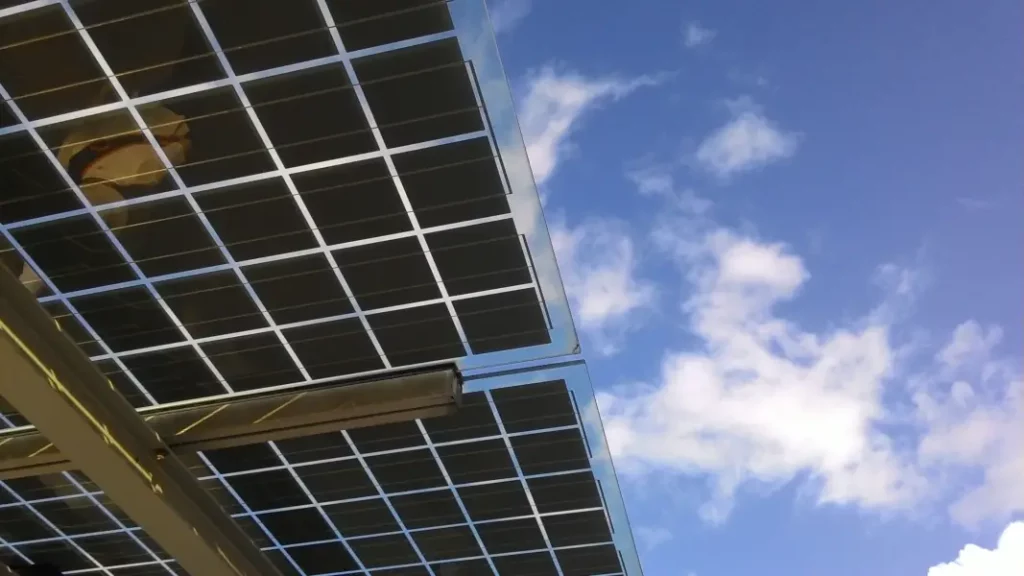
Les panneaux solaires, aussi robustes et technologiquement avancés soient-ils, ne sont pas à l’abri d’une surchauffe. En effet, alors que ces dispositifs sont conçus pour absorber la lumière du soleil et la convertir en électricité, un excès de chaleur peut réduire leur efficacité. Les panneaux solaires sont composés de matériaux semi-conducteurs dont la température de fonctionnement optimale se situe généralement autour de 25 degrés Celsius (77 degrés Fahrenheit). Au-delà de cette température, l’efficacité du panneau commence à diminuer. Pour chaque degré au-dessus de cette température, la puissance produite peut diminuer d’environ 0,5 %.
En outre, la surchauffe peut entraîner l’apparition de points chauds, c’est-à-dire de zones d’un panneau qui deviennent nettement plus chaudes que d’autres en raison d’une exposition inégale à la lumière du soleil ou d’un défaut de la cellule. Les points chauds peuvent accélérer la dégradation des cellules concernées et, dans les cas les plus graves, présenter un risque d’incendie.
Quelle est la température optimale pour les panneaux solaires ?
La température optimale pour la plupart des panneaux solaires se situe autour de 25 degrés Celsius (77 degrés Fahrenheit). C’est la température utilisée comme norme pour mesurer la température nominale de fonctionnement de la cellule du panneau (NOCT). Au-delà de ce point, pour chaque degré d’augmentation de la température, il y a une diminution correspondante de l’efficacité du panneau, généralement d’environ 0,5 % par degré Celsius. Cela peut sembler minime, mais pendant les journées d’été très chaudes, ces pertes peuvent s’accumuler.
Comment éviter la surchauffe des panneaux solaires ?
Bien que la possibilité d’une surchauffe des panneaux solaires puisse être inquiétante, il existe des moyens d’y remédier. Tout d’abord, la conception et l’emplacement du système de panneaux solaires doivent favoriser une circulation d’air suffisante. Étant donné que les panneaux solaires peuvent se refroidir en émettant de la chaleur dans l’air ambiant, une installation qui permet la circulation de l’air autour des panneaux peut contribuer à maintenir les températures à un niveau bas.
Deuxièmement, le choix de panneaux solaires ayant un coefficient de température plus faible peut également s’avérer bénéfique. Le coefficient de température est une mesure de la diminution de la production d’un panneau pour chaque degré au-dessus de la norme de 25 degrés Celsius. Les panneaux ayant un coefficient de température plus faible seront moins affectés par des températures plus élevées.
En outre, l’entretien et l’inspection périodiques des panneaux solaires permettent d’identifier et de résoudre les problèmes susceptibles d’entraîner une surchauffe, tels que l’accumulation de saletés, l’ombrage ou les dommages physiques. Enfin, de nouvelles technologies telles que les systèmes de refroidissement actifs ou les matériaux thermoconducteurs sont à l’étude pour réduire la chaleur des panneaux solaires.
Faut-il s’inquiéter de la surchauffe des panneaux solaires ?
Bien que les panneaux solaires puissent surchauffer, il est important de noter que ces situations sont relativement rares et qu’elles sont souvent dues à des conditions spécifiques ou à des erreurs d’installation. Les panneaux solaires sont rigoureusement testés pour résister à une grande variété de climats et de conditions météorologiques, et les fabricants réputés veillent à ce que leurs panneaux répondent à des normes élevées de qualité et de durabilité.
Toutefois, il est prudent de reconnaître le risque de surchauffe et de prendre des mesures pour l’éviter afin de préserver l’efficacité et la longévité de votre système de panneaux solaires. Des contrôles réguliers et une installation appropriée sont la clé d’une expérience sans souci avec les panneaux solaires.
Conclusion
Les panneaux solaires représentent un investissement important pour un avenir durable, et il est essentiel de comprendre leurs performances dans différentes conditions pour en tirer le meilleur parti. Bien qu’une surchauffe puisse se produire, il ne s’agit pas d’un problème fréquemment rencontré et il peut être géré efficacement avec les bonnes mesures préventives. En reconnaissant et en tenant compte des limites thermiques des panneaux solaires, nous pouvons assurer un fonctionnement efficace et contribuer à un avenir plus propre et plus vert.